AM Step 2 — Address Sources of Problems
AM Step 1 exposed what was there. AM Step 2 deals with why it keeps coming back.
The team that completes AM Step 1 properly has a clean machine, a list of abnormalities found and fixed, and a growing sense of what their equipment is supposed to look like. They also have a list of problem areas, the places that are hard to keep clean, hard to reach, prone to contamination, or difficult to maintain at a standard.
AM Step 2 is where those problem areas get addressed. Not just cleaned again. Addressed. The team finds the source of each problem, understands why it exists, and makes a change that makes the problem less likely to return.
This is the step where the team moves from reactive to investigative. They are no longer just finding and fixing. They are starting to understand.
Autonomous Maintenance is built in sequence, step by step, using a structured development process confirmed by audit at each stage. If you are new to the system, the AM Pillar page explains how it works before you begin.
AM Phase 1 — Restoration
AM Step 2 is the second of three steps in the Restoration phase. The goal of this phase is to bring the equipment back to a known, clean, properly maintained condition, and to put the standards in place to keep it there.
The three steps build on each other in sequence:
- AM Step 1 — Initial Cleaning to Inspect. The team cleans the equipment thoroughly for the first time, exposes hidden abnormalities, and begins to understand what good condition looks like.
- AM Step 2 — Address Sources of Problems. The team addresses the root causes of the problem areas found in Step 1, makes the equipment easier to maintain, and begins to eliminate losses.
- AM Step 3 — Set CIL Standards. The team establishes the Cleaning, Inspection, and Lubrication standards that will maintain the equipment condition going forward. CIL becomes a Hypercare Process, reviewed through the Tiered Accountability Meeting at every tier.
You cannot run AM Step 2 well without having done AM Step 1 properly. The problem areas AM Step 2 addresses are the ones AM Step 1 found. If AM Step 1 was rushed, AM Step 2 has nothing solid to work from.
Working with the Maintenance function
The Maintenance function is an active partner in AM Step 2. Physical countermeasures, guards, drip trays, access modifications, often require maintenance resource or engineering input to design and implement. Defect Tags from AM Step 1 that have not yet been closed are tracked and closed during this step. The operating team leads the investigation. Maintenance supports the implementation.
Purpose
The purpose of AM Step 2 is to address the remaining abnormalities and problem areas found in AM Step 1, make the equipment conditions established in AM Step 1 easier to maintain, and begin to eliminate losses.
Three things happen in parallel. The team continues to maintain the clean, inspected condition they established in AM Step 1, that work does not stop. The team investigate the sources of the problems they found and implement countermeasures. They develop their ability to identify root causes and make improvements that hold.
The goal of this progression is to develop Technical Operators, human sensors who understand their equipment well enough to maintain its basic conditions, detect early deterioration, and respond correctly when something is not right. That development began in Step 1 and continues here.
The shift from AM Step 1 to AM Step 2 is a shift in depth. AM Step 1 asked "what is here?" AM Step 2 asks "why is it here, and what do we do about it?"
Objectives
AM Step 2 has two sets of objectives running in parallel. One is about the equipment. The other is about the people. Both matter. Neither is optional.
For the equipment
Address problem areas
The problem areas identified in AM Step 1, sources of contamination, hard-to-reach locations, equipment or process settings that are difficult to hold to a standard, are now investigated and addressed.
For each problem area, the team analyses the root cause and implements a countermeasure to eliminate or control it.
The countermeasure might be physical, a guard added, a drip tray installed, an access panel modified. It might be procedural, a cleaning sequence changed, a lubrication point made more accessible, a setting marked so drift is immediately visible. Either way the test is simple, does the problem come back at the same rate, or has the countermeasure changed something?
The three categories of problem areas from AM Step 1 are all in scope:
- Sources of contamination. Where is the dirt, product residue, or fluid coming from? Can the source be eliminated? If not, can it be controlled so it accumulates more slowly or is easier to clean?
- Hard-to-reach areas. If a location cannot be reached for cleaning, inspection, or lubrication in the time available, it will not be maintained. AM Step 2 addresses access, through physical modification, tool changes, or revised cleaning sequences, so that the standards set in AM Step 3 can be easily followed.
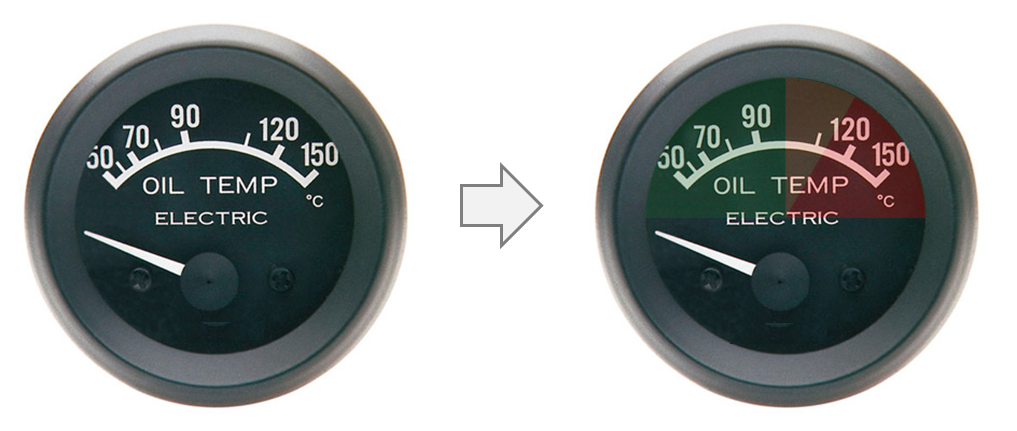
- Equipment and process settings. Settings that change frequently or are difficult to hold to a standard are identified and stabilised. Visual controls are added so the team can see at a glance whether a setting is within range.
Improve selected losses
AM Step 2 is also where the team begins to work on a selected loss improvement theme. Based on everything found in Step 1, the team identifies one loss area to focus on, a category of stops, a quality issue, a speed loss, and works to reduce it.
This is not a full improvement project. It is the team's first structured attempt to connect what they are finding during cleaning and inspection to the performance numbers they see every shift. The sub-theme work accelerates improvement in that area and builds the team's skill in identifying and eliminating losses.
The improvement strategies vary by loss type:
- Breakdowns: Improve detection of the conditions that contribute to them. The goal at this stage is to spot problems earlier, not necessarily to eliminate the root cause, that comes in later steps.
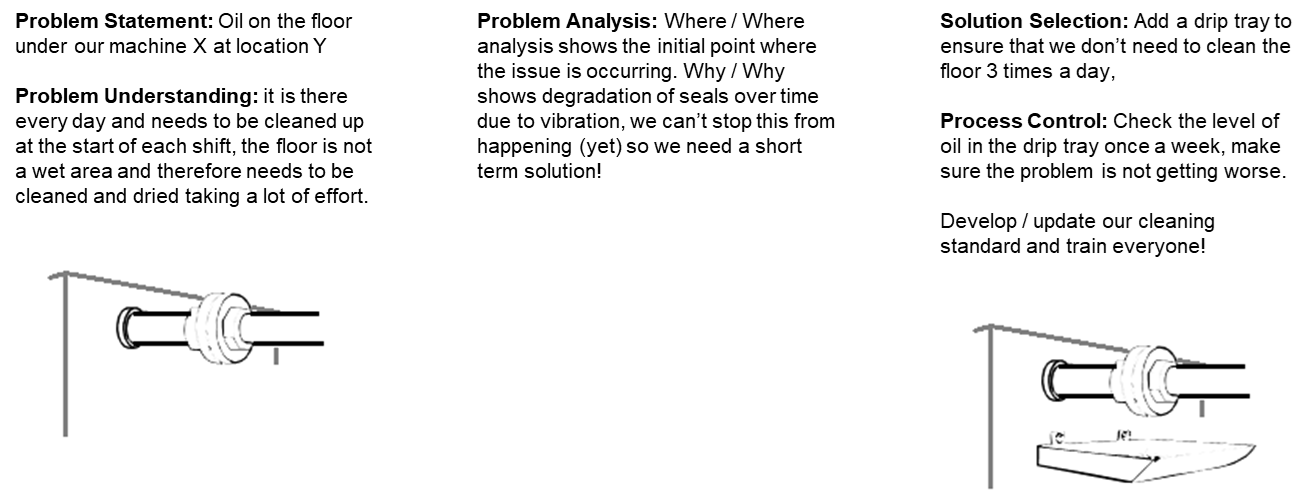
- Minor stops: Use a strong Problem Statement with a focused 5 Why analysis. Cleaning is often a key factor, a contamination source that was not addressed in AM Step 1 is frequently the cause.
- Reduced speed: Identify the gap between current speed and design speed. Investigate to find out why the equipment is not running at full capacity.
- Quality losses: Classify the causes and develop countermeasures, including standard methods to reduce human error.
- Setup losses: Identify what can be done before the changeover begins and what must happen during it. Eliminate unnecessary adjustments. Use 5S to organise the changeover area.
Maintain the work done in AM Step 1
AM Step 1 established a baseline condition. That condition must be maintained throughout AM Step 2 (and beyond). The daily cleaning and inspection cycle continues. Abnormalities are still tagged, recorded, and escalated. The defect handling system is still running.
This is not optional. If the AM Step 1 condition is allowed to drift while the team focuses on AM Step 2 improvements, the baseline is lost. The sequence only works if each step is genuinely maintained while the next one is built.
For our people
Develop teamwork
In AM Step 2, the team shifts from individual cleaning tasks to shared improvement work. Every team member focuses on making improvements against the selected problem areas. Everyone participates and contributes their experience and knowledge of the equipment.
The shared experience of investigating a problem together, finding the source, agreeing on a countermeasure, implementing it, and checking whether it worked, builds a different kind of team capability than cleaning alone. The team is beginning to function as a problem-solving unit, not just an operations crew.
Develop skills
AM Step 2 introduces the team to basic analytical tools. They learn to evaluate the source and cause of problem areas thoroughly, rather than addressing the symptom and moving on.
The tools used at this stage are deliberately simple. The team is not expected to conduct complex root cause analysis. They are expected to go one level deeper than the obvious answer.
The improvement process follows a basic cycle: understand the current conditions, analyse the root cause, develop a countermeasure, implement it, and verify that the target has been met. This cycle is the same logic that underpins more advanced problem-solving methods. Learning it at this level, on real problems on their own equipment, is how the team builds the capability to use it more rigorously later.
Develop awareness and curiosity
AM Step 2 deepens the curiosity that AM Step 1 began to build. The team starts to see the direct connection between specific inspection points and the daily performance numbers. They begin to understand that the losses they have been living with are not inevitable, they are the result of conditions that can be changed.
The realisation that losses can be eliminated, and that improvements can be maintained through daily cleaning and inspection, is the shift that makes AM Step 2 meaningful. It is the point at which the team stops seeing AM as a cleaning programme and starts seeing it as a performance system.
Measures of success
AM Step 2 uses the same measurement framework as AM Step 1, with the baseline now established and the focus shifting to results.
These three measures were set in AM Step 1 and continue to be tracked throughout AM Step 2:
- Output Measure: Number of unplanned stoppages. The trend should be moving downward. AM Step 2 is working when this number falls.
- Efficiency Measure: Routine cleaning and inspection time. This should be reducing as problem areas are addressed and access improves. The countermeasures the team implements in AM Step 2 should make the daily maintenance cycle faster, not slower.
- In Process Measure: Number of defects identified. The count should be stabilising as the most significant abnormalities are found and addressed. A count that is still rising sharply in AM Step 2 is a signal that AM Step 1 was not completed properly.
Pillar progress measures, track as you go
These measures track the progress of the step and the development of the team.
- Problem area backlog trend. The total number of open problem areas. Should be falling as countermeasures are implemented and verified. A count that is not falling means the team is not making progress, or new problem areas are being identified faster than old ones are being closed.
- Problem areas with a named owner and a plan. The target is 100%. Every identified problem area has someone responsible for it and a plan for addressing it. Track the percentage.
- Cleaning and inspection time trend. Is the time required to complete the daily cycle falling? This is the clearest signal that problem areas are genuinely being addressed. Track it every session.
- Selected loss improvement topic trend. Is the chosen loss category reducing? Track the trend against the baseline established at the start of AM Step 2. The direction matters more than the number at this stage.
- One Point Lessons developed and taught. Count of OPLs developed from investigation and improvement work, and the number of people trained on each.
- Operator skill and knowledge level. Tracked against the capability matrix. Can the team member identify root causes and implement countermeasures? Can they explain the connection between a problem area and the performance numbers?
By the time the AM Step 2 audit is conducted, the team should be able to demonstrate:
- AM Step 1 condition maintained, equipment clean and free of accumulated contamination
- All identified problem areas investigated, an analysis conducted for each one
- Countermeasures implemented for priority problem areas and verified against the improvement target
- Sources of contamination addressed or controlled, rate of accumulation reduced
- Hard-to-reach areas modified or cleaning approach changed so the standard can be maintained in the time available
- Visual controls in place for critical settings and inspection points
- Before-and-after evidence of countermeasure effectiveness documented and accessible
- Cleaning and inspection standards updated and the team trained on them
- Minor stops reduced by 50% from the AM Step 1 baseline
- Cleaning and inspection time reduced by 90% from the original baseline
- Selected loss improvement topic reduced by 80% from baseline
- At least one additional improvement per person completed
- One Point Lessons developed and taught to the team
- Tiered Accountability Meeting operating and Problem Area Elimination being reviewed at every tier
Systems required before you start
The systems from AM Step 1 must be sustained. All of them. The defect handling process, the data collection and review system, the improvement tracking system, the One Point Lesson process, the capability matrix, and the step audit process are all still running. AM Step 2 adds to them, it does not replace them.
Hypercare Process: Problem Area Elimination
A Hypercare Process is one that is actively reviewed at every tier of the Tiered Accountability Meeting until it is stable and performing to standard. In AM Step 2, Problem Area Elimination joins Defect Handling on the Tiered Accountability Meeting agenda. Both run in parallel throughout the step.
Defect Handling continues from AM Step 1, abnormalities are still being found, tagged, escalated, and closed. Problem Area Elimination is the new focus: are the root causes of the problem areas being investigated, countermeasured, and verified? Is the backlog of open problem areas falling?
The process owner is the AM Pillar leader, who is accountable for the system design and its health. The line leader is accountable for daily execution.
The specific measures tracked for Problem Area Elimination, in-process and output, are part of the Measures of success section above.
What happens at each level
Tier 1 Prep | Daily
Before the Tier 1 meeting, the line leader walks the unit board. They check the problem area count, the backlog trend, and whether every open problem area has a named owner and a current status. They check the cleaning time result from the previous session, is it moving in the right direction? They arrive at the Tier 1 meeting already knowing the picture.
Questions the line leader is asking at the board:
- Is the problem area backlog falling?
- Is cleaning time reducing as we address problem areas?
- Does every open problem area have an owner and a plan?
- Is there anything here that needs to go up today?
Tier 1 — Line leader with the operating team | Daily
Review the status of each problem area under investigation. Confirm that every open problem area has a named owner and a current plan. Identify anything that cannot be progressed at line level and escalate it today. Review the cleaning time result from the previous session. Recognise the team for countermeasures that have been verified and closed.
Key questions:
- Which problem areas did we make progress on since last session?
- What is still open, and does it have an owner and a plan?
- Is our cleaning time moving in the right direction?
- What do we need from the level above to close what we cannot close ourselves?
Tier 2 — Area or department leader | Daily
Review escalated problem areas from all lines. Confirm that every escalated item has a named owner and a realistic plan. Remove the barriers that are preventing the team from closing problem areas — parts, access, maintenance resource, engineering input. Monitor the cleaning time trend across lines. If one line's cleaning time is not falling while others are improving, ask why.
Key questions:
- What has been escalated from each line since yesterday?
- Does every escalated item have an owner and a plan?
- What is blocking progress, and what do I need to do to remove that block today?
- Is the cleaning time trend moving in the right direction across all lines?
Tier 3 — Site or function leader | Daily
Review overall problem area backlog health and trend across the site. Identify recurring problem types or areas with persistent backlogs, these are systemic issues, not line-level problems. Make resourcing or prioritisation decisions that Tier 2 cannot make. Confirm that the system is functioning: that escalations are reaching Tier 2 and being acted on, and that the Problem Area Elimination Hypercare is producing the expected reduction in cleaning time and selected losses over time.
Key questions:
- What is the overall problem area backlog trend, and is it falling?
- Are there problem types or areas that keep appearing? What is the systemic cause?
- Is Tier 2 getting what it needs to close escalations? If not, what decision do I need to make?
- Is the system producing the cleaning time reduction and loss improvement we expect from AM Step 2?
The AM Step 2 process
AM Step 2 follows a defined sequence. Each stage builds on the one before it. The sequence is not arbitrary, it reflects the logic of what needs to happen and in what order.
Preparation
Preparation determines whether the rest of the step runs well or runs badly.
Train the team on the AM Step 2 process and tools
Before the team begins AM Step 2 work, they need to understand three things, how problem definition and problem solving works, what the approach is for eliminating sources of contamination and hard-to-reach areas, and what the audit criteria are. These are not things to explain as you go. They are things to establish before you start, so the team knows what they are doing and why.
Review and update the cleaning cycle
Review the cleaning cycle from AM Step 1 and set a cleaning time target for AM Step 2. The goal is to reduce cleaning and inspection time as problem areas are addressed and access improves. The team should know from the start what the target is and how progress will be measured.
Clarify roles and responsibilities
Who is responsible for which problem area? Who is leading which improvement? These assignments should be clear before AM Step 2 begins. Every team member should know what they are personally accountable for during the step.
Prepare tools, forms, and supplies
The right tools for countermeasure selection and implementation, the right forms for analysis and improvement tracking, and the right supplies for any physical modifications, all of these need to be ready before the team begins.
Safety activities
Continue following the risk prediction and safety standards established in AM Step 1. No new safety assessment is required unless the AM Step 2 work involves accessing areas or using materials not covered in the AM Step 1 assessment. If it does, conduct a new risk assessment before proceeding. Any physical modifications to equipment, guards, drip trays, access panels, must be reviewed for safety implications before implementation.
Maintain AM Step 1 work
The daily cleaning and inspection cycle continues throughout AM Step 2. This stage is not a phase that ends, it runs in parallel with everything else in AM Step 2.
Continue the cleaning cycle
The team follows the cleaning cycle established in AM Step 1. The standard is maintained. The equipment condition does not drift while the team focuses on improvement work.
Continue to identify and address abnormalities
Abnormalities are still tagged, recorded, and escalated. The defect handling system is still running. New abnormalities found during AM Step 2 are handled through the same process as AM Step 1.
Update the activity board
The Line Activity Board is updated for AM Step 2. It shows the current status of problem areas, countermeasures, and results alongside the continuing defect handling data from AM Step 1.
Record questions and learnings
Every question the team asks during AM Step 2 is a learning opportunity. Record them. Develop One Point Lessons from what the team learns during investigation and improvement work. Train others on them.
Monitor and track daily results
Daily results are reviewed at the start of each session. Cleaning time, defect counts, problem area status, and loss theme progress are all tracked and visible on the board.
Prioritise problem areas
Based on the cleaning cycle and the problem area list from AM Step 1, the team maps all significant problem areas. Sources of contamination and hard-to-reach locations are evaluated against two criteria: the impact of the problem area on losses and cleaning time, and the effort required to address it. The highest-impact, most addressable problems are selected for countermeasure development first.
Not every problem area can be addressed in Step 2. The team selects the ones that will have the greatest effect on cleaning time and the selected loss theme. The rest are documented and carried forward.
Root cause analysis, define actions, and plan
For each selected problem area, the team analyses the root cause directly at the equipment. The analysis is based on actual on-floor conditions, not assumptions. The team goes to the equipment, observes the problem directly, and asks why, repeatedly, until they reach a cause they can act on.
Once the root cause is identified, countermeasures are developed and responsibilities are assigned. Individual improvement targets are set. A countermeasure plan is created, including any support needed from other functions, maintenance, engineering, or adjacent teams.
The goal at this stage is not to find the perfect solution. It is to find a countermeasure that addresses the root cause well enough to change the condition, verify that it works, and then improve it if needed. Restoration before improvement, the same principle as AM Step 1, applies here.
Implement countermeasures
Countermeasures are implemented using the change management system. The countermeasure plan is executed. Visual controls are added where they will make the condition immediately readable, marked gauges, labelled lubrication points, colour-coded settings.
Once implemented, the team verifies that the individual improvement targets have been met. The improvement is documented for re-application and the master plan is updated. The cleaning and inspection cycle is confirmed against the overall time target.
Update Cleaning and Inspection standards
As problem areas are addressed and the cleaning approach changes, the standards are updated to reflect the new method. The team trains others on how to perform the updated standards.
Standards that are not updated are standards that will not be followed. The team will revert to what they know, and the improvement will drift. Updating the standard is not the final step, training the team on it is.
Track results
Results are recorded at shift level by the team, every shift, not just every day. Not weekly. Not at the end of the step.
Monitor and trend results
The team reviews the data from the previous session at the start of each new session. What losses occurred that should have been prevented? Which problem areas made progress? What is still open?
Track process and output measures
Both types of measures are tracked, the process measures (problem areas addressed, countermeasures implemented, OPLs developed) and the output measures (cleaning time, minor stops, selected loss theme). The process measures tell you whether the team is doing the right things. The output measures tell you whether those things are working.
Identify gaps and take appropriate actions
Where the results are not moving in the right direction, the team identifies why and adjusts. The Tiered Accountability Meeting is the forum for escalating gaps that the team cannot resolve themselves.
Behaviours
AM Step 2 produces a specific set of behaviours in the team. These are not aspirational, they are observable. If you walk the line during AM Step 2 and you do not see these behaviours, the step is not running correctly.
What good looks like in the team
- People investigate problem areas rather than just cleaning around them. When they find contamination, they ask where it is coming from, not just how to clean it up.
- People use structured analysis as a matter of course. They go one level deeper than the obvious answer.
- Every team member is working on at least one improvement. Nobody is watching while others work.
- When an improvement works, people write it up and train others on it. The knowledge does not stay with one person.
- People maintain the AM Step 1 condition without being reminded. The daily cleaning and inspection cycle is a habit, not a task.
- Teams track their own results and can explain the trend, what is improving, what is not, and what they are doing about it.
What good looks like in leadership
- Ensure that AM Step 1 conditions are maintained before allowing the team to focus on AM Step 2 improvements. The baseline must be stable before improvement work begins.
- Teach machine motion and the transformation process. The team needs to understand what their equipment does, not just what it looks like.
- Teach basic analysis tools such as Where-Where and Why-Why analysis. Use them with the team on real problems, do not just explain the tools, demonstrate them.
- Coach on the difference between a countermeasure and a fix. A countermeasure controls a problem. A fix eliminates it. Both have their place. The team needs to know which they are doing and why.
- Check that root causes are being verified against actual conditions, not assumed. A Why-Why analysis that is done in a meeting room rather than at the equipment is not a Why-Why analysis.
- Teach the importance of standards. Every improvement made in AM Step 2 must be captured in an updated standard and trained. The work is not done when the countermeasure is implemented. It is done when the standard is updated and the team is trained.
- Monitor the team's ability to handle abnormalities independently. The goal is for the team to be resolving more of what they find themselves, with fewer escalations over time.
- Balance the need for improvement work with the need to maintain AM Step 1 conditions. Both must happen. Neither can be sacrificed for the other.
AM Step 2 audit
The AM Step 2 audit is a formal confirmation that the expected capability has been achieved. It is not a surprise inspection, the team has known the criteria since the preparation stage. It is the moment where the team's work is recognised and their readiness to move to AM Step 3 is confirmed.
The audit is requested by the team and conducted by a qualified assessor, typically the AM Pillar leader or an external facilitator. It is done with the team present. It covers both the equipment condition and the team's capability.
What the audit checks
Equipment condition
- The AM Step 1 condition is being maintained. The equipment is clean and free of accumulated contamination.
- All identified problem areas have been investigated. An analysis has been conducted for each one.
- Countermeasures have been implemented for the priority problem areas and verified against the improvement target.
- Sources of contamination have been addressed or controlled. The rate of contamination accumulation has reduced.
- Hard-to-reach areas have been modified or the cleaning approach has been changed so that the standard can be maintained in the time available.
- Visual controls are in place for critical settings and inspection points.
- Before-and-after evidence of countermeasure effectiveness is documented and accessible.
Team capability
- Team members can explain the simple problem analysis methods and demonstrate them on a real problem from their equipment.
- Team members can distinguish between a countermeasure that controls a problem and one that eliminates it.
- Team members can explain the selected loss improvement theme, what the baseline was, what the current result is, and what they are doing to close the remaining gap.
- Team members understand the connection between the problem areas they have addressed and the performance numbers they track every shift.
- One Point Lessons have been developed from AM Step 2 learnings and the team has been trained on them.
- The cleaning and inspection cycle is being followed consistently and the time required has reduced from the AM Step 1 baseline.
Systems and standards
- The Cleaning and Inspection standards have been updated to reflect the changes made during AM Step 2 and the team has been trained on them.
- The improvement tracking system is in use and the team can demonstrate their improvement per person.
- The problem area log is complete and up to date. Every identified problem area has a status: under investigation, countermeasured, or closed.
- The re-application process has been used, improvements made in AM Step 2 have been shared with adjacent teams or improvements from other teams have been reviewed for applicability here.
- The Tiered Accountability Meeting is operating and Problem Area Elimination is being reviewed at every tier.
- Baseline results for all process and output measures have been updated to reflect the AM Step 2 starting point for AM Step 3.
If the audit passes:
Celebrate the success. The team has moved from finding problems to understanding and eliminating their causes. That is a genuine shift in capability. Recognise it publicly. Then begin AM Step 3 preparation.
If the audit does not pass:
The audit identifies the specific gaps. The team develops countermeasures for each gap and implements them. When the countermeasures are closed, the audit is repeated. There is no fixed timeline for the re-audit, it happens when the gaps are genuinely addressed, not when a calendar date arrives.
A failed audit is not a failure of the team. It is information. It tells the team and the leader exactly what still needs to be done. The discipline is in addressing it properly, not in moving on before it is ready.
Do not move to AM Step 3 until AM Step 2 is genuinely complete. The CIL standards set in AM Step 3 are built on the conditions established in AM Steps 1 and 2. If those conditions are not stable, the standards will not hold.
What next?
AM Step 2 establishes that the problem areas are understood and controlled. The equipment is easier to maintain. The team knows how to investigate a problem, not just find one. The cleaning and inspection cycle is faster and more reliable than it was at the end of AM Step 1.
AM Step 3 builds on that by formalising the standards. The Cleaning, Inspection, and Lubrication standards that will maintain the equipment condition going forward are defined, documented, and trained. CIL becomes a Hypercare Process, reviewed through the Tiered Accountability Meeting at every tier.